
Custom Home Builders: How Do Custom Builders Find Clients Before They Buy Land?
Short Answer: Help buyers choose the right lot.
Most custom home clients buy land first, then look for a builder. By then, they may have paid for a lot with costly site problems, and they’ve already spent part of their budget.
A builder who shows up during the land search earns trust early, prevents expensive surprises, and becomes the natural choice once the lot is purchased.
The Lot Is Only Part of the Cost
The National Association of Home Builders (NAHB) surveyed builders on the cost of a new home in 2024.
On average, the finished lot made up 13.7% of the sales price, down from 17.8% in 2022. Construction costs made up 64.4%.
NAHB – Cost of Constructing a Home in 2024
Note the word “finished.”
A raw lot isn’t finished. Getting it ready for construction can mean:
- Installing a well
- Building a septic system
- Constructing a long driveway
- Bringing power in from the road
- Completing heavy grading
Buyers who see only the land price often miss what comes next.
The Client Who Arrived Too Late
Imagine a custom home builder named Elena.
She has 15 years of experience building quality homes, a great reputation, and a waiting list most years.
A couple comes to her with a beautiful hillside lot they purchased for $240,000. Their total budget is $1.1 million.
Elena walks the site and identifies several challenges:
- The slope will require serious retaining walls.
- Power is 900 feet away.
- Soil tests suggest an engineered septic system.
Her rough site estimate is about $110,000 before the foundation goes in.
The couple is stunned. Their house shrinks on paper to fit what’s left.
Elena hears this story several times a year. Each time, she thinks: if they’d called before buying, she could have saved them a lot of grief.
Five Ways to Meet Buyers Earlier
1. Offer a Paid Lot Review
Elena now sells a “Before You Buy” lot evaluation for $850.
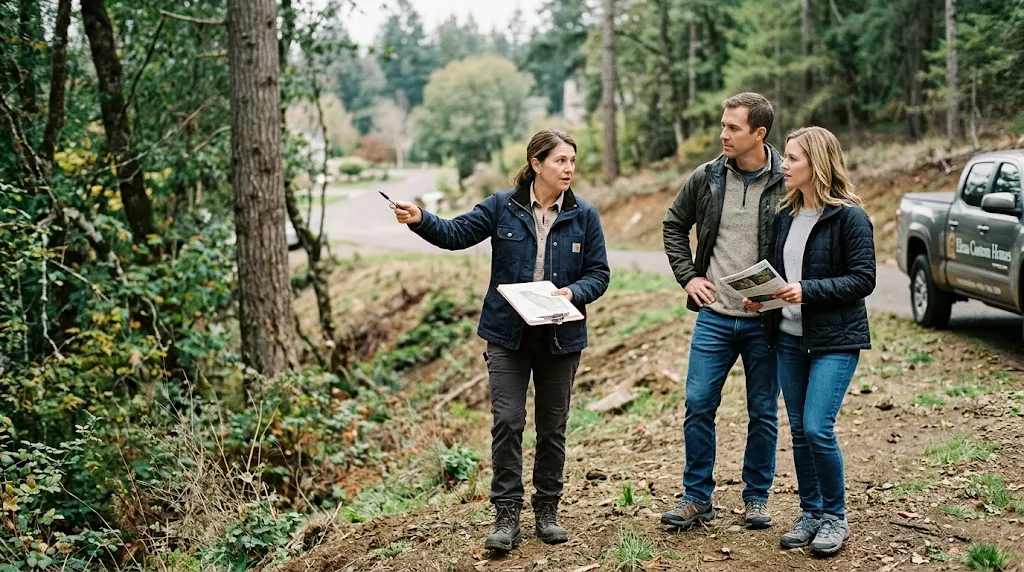
She walks the site, checks access, slope, utilities, setbacks, and septic requirements, and provides a written estimate of potential site costs.
If the client builds with her, the evaluation fee is credited toward the construction contract.
2. Partner With Land Agents
Agents who sell rural and infill lots hear the same question repeatedly:
“What would it cost to build here?”
Elena told six land agents she’d review any listing within a week for their buyers.
Two now call her regularly.
3. Publish a “Build on Your Lot” Guide
Her website explains, in plain language, the hidden costs of raw land:
- Wells
- Septic systems
- Power connections
- Driveways
- Grading
- Permits
Each item includes a typical price range for her area.
Buyers searching for land find the page before they find a builder.
4. Give a Realistic Budget Range
Custom home clients often fear the price conversation.
Elena publishes a per-square-foot price range for her typical homes, along with a separate estimate for site work.
This approach filters out buyers who aren’t ready and helps serious prospects plan realistically.
5. Hold a Small Workshop
Twice a year, Elena hosts a free evening session at her office:
“Buying Land to Build On.”
Twelve to twenty people attend.
She doesn’t sell. She teaches.
Several attendees become clients a year or two later.
What the Lot Review Covers
Elena’s written review fits on two pages.
It includes:
- Road Access: Likely driveway length and estimated cost
- Power: Distance to the nearest power source and whether a transformer is likely
- Water Source: City water connection or well, with a typical well cost for the area
- Sewer or Septic: Whether the soil appears suitable for a standard septic system
- Slope and Ground Conditions: Rock, grading requirements, and potential retaining walls
- Property Restrictions: Setbacks, easements, and anything else that limits where the house can sit
Each item gets a low and high cost estimate.
The total gives buyers a realistic number to weigh against the asking price.
Some use it to negotiate the lot price down.
One couple saved $35,000 that way, and they built with Elena.
What Changed for Elena
Here’s the reality check.
Most lot reviews don’t turn into contracts.
Some buyers walk away from the lot she flagged and then buy somewhere far from her area. Others aren’t ready to build for two or three years.
In her first year, Elena completed 22 lot reviews.
Five of those buyers signed contracts, and three more are planning to build.
With her average home priced at about $950,000, five contracts meant approximately $4.75 million in work.
All five started with a realistic budget, so none of them felt shocked halfway through the project.
She also lost fewer clients to the “we spent too much on the land” problem.
That alone made the program worth it.
Your Early-Client Checklist
Use this checklist to start connecting with potential custom home clients before they purchase land:
-
A paid lot review, credited toward the build contract
-
Six land agents who know you’ll review listings within a week
-
A website guide to the hidden costs of raw land in your area
-
A per-square-foot price range for your homes, plus a separate site-work estimate
-
A free “Buying Land to Build On” workshop twice a year
-
A list of every lot review, with an annual follow-up note
Be There Before the Purchase
The best time to meet a custom home client is before the closing on their land.
Show up as the person who helped them buy wisely, and the building contract tends to follow.
If you were buying land to build on, who would you call first: the land agent or the builder?
Author: Thomas E. Lodato, J.D.
Scale Hawk Media Group