
The Subcontractor Who Saved Me $82,000 by Saying “We Need to Talk”
Good subs follow the plans. Great subs make them better.
SEO Title: How a Subcontractor Saved $82,000 by Speaking Up
SEO Description: My HVAC sub flagged a duct layout that passed code and would fail the client. A $2,500 framing change avoided an $82,000 fix.
Cover Image: An HVAC tech and a builder going over plans on site among fresh framing.
A subcontractor once saved me $82,000.
He didn’t give me a discount. He told me my plans were wrong.
Would your subs do that for you?
“We need to talk”
We were three weeks into a custom home. The foundation was poured. Framing started the next week.
My HVAC sub walked the site. Then he came over and said, “We need to talk.”
He pulled out the plans and pointed at the ductwork.
“This design works. It meets code. It gets the job done. In five years, though, your client is going to hate it.”
Then he showed me why:
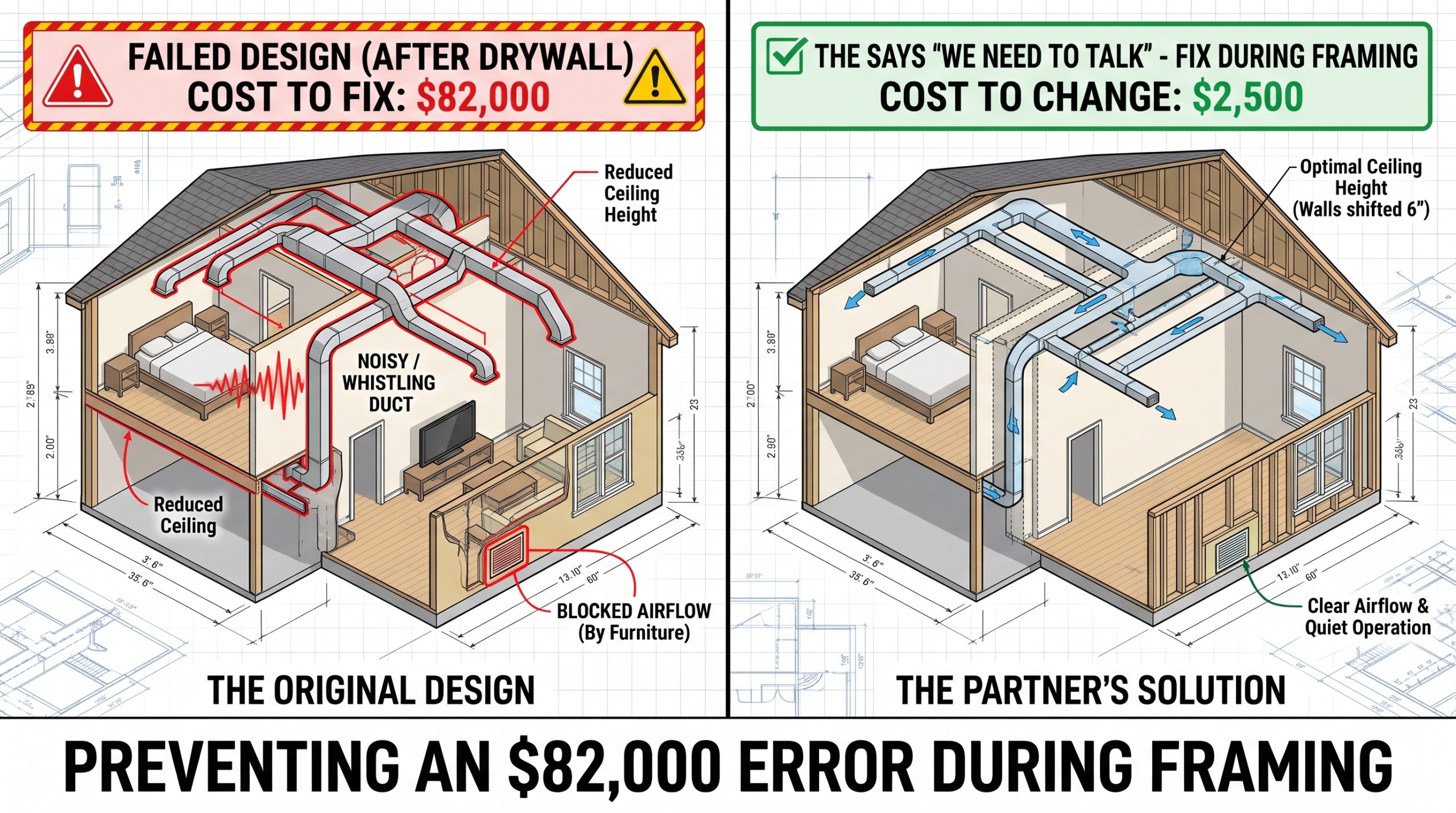
- The main return sat right where furniture would go. A couch would block the airflow.
- The master bedroom register would whistle at some fan speeds.
- The layout needed two extra duct runs. Those would eat into the garage ceiling height.
None of it would fail inspection. All of it was a problem waiting to happen.
He had a better layout. It meant moving two walls six inches during framing, while we still could.
Cost to change it now: $2,500 in framing.
Cost to change it after drywall: $82,000.
We made the change. Net of the framing cost, that one talk saved the project $79,500.
A reality check: most catches are smaller than this one. A few hundred dollars here. A callback avoided there. Over a career, they add up.
He could have stayed quiet
This is the part that stays with me.
That sub could have kept quiet. Built what the plans showed. Cashed his check. Moved on.
When the problems showed up three years later, he’d be long gone. And it wouldn’t have been his fault.
He followed the plans.
He spoke up anyway.
That’s rare. On most jobs, the incentives push subs to stay silent. Speaking up means extra work. It can mean a fight with the designer. It can get you labeled “difficult.” Silence is easier, and it pays the same.
Subs who speak up anyway think differently. They see their work as part of a home someone will live in. They see more than a line item to close out.
Timing is everything
The numbers in this story follow a pattern every builder knows:
- On paper, a change is cheap.
- Before framing, it’s still cheap.
- After the walls close, it gets expensive fast.
- After move-in, it can be close to impossible.
$2,500 versus $82,000 is no fluke. It’s the same choice, made at two points in time. The difference was a trade partner who looked ahead while the fix was still cheap.
The people who install the systems often see what the drawings can’t show.
Vendor or partner?
The best contractors I know skip subs who just say “yes.”
They hire subs who say, “Yes, and here’s how we make it better.”
A vendor builds what’s drawn and guards their margin.
A partner builds what’s drawn and guards your result.
A partner is worth paying more for. One talk like this one covers the extra cost many times over.
General contractors: make it safe to speak up
To get subs who flag problems, build a job site that welcomes them. Five habits help:
- Walk the plans with key trades before framing. HVAC, plumbing, and electrical catch conflicts while they’re cheap to fix.
- Ask straight out. “What would you change if this were your house?” gets honest answers. “Any questions?” rarely does.
- Thank the messenger. If the first sub who raises a concern gets treated like a problem, no one raises the second.
- Give credit in public. Tell the owner and the architect who caught it. Subs notice who gets the credit.
- Hire them again. The next job is the best reward.
Subcontractors: how to raise it well
If you see a problem in the plans, how you raise it matters as much as what you raise. My HVAC sub did it about as cleanly as it can be done:
- He came early. Before framing, while the fix was cheap.
- He brought the plans. He showed me the exact problem.
- He explained the effect on the client. Blocked air, noise, lost ceiling height.
- He brought a fix. A better layout, ready to go.
- He knew the cost. Six inches, two walls, $2,500.
Do that, and you won’t be seen as difficult. You’ll be the first call on the next job.
Good subs follow plans. Great subs improve them.
I’ve worked with a lot of subs over the years. I remember few of the ones who just did what they were told. I remember every one who made a project better.
Can you think of a sub like that on your jobs?
Has a trade partner ever caught something that saved your project? Or were you the one who spoke up? Share the story in the comments.
Follow me for a new lesson from the job site every week.