
Garage Doors: How Do Garage Door Companies Stand Out from Lowball Ads?
Short Answer: Win on speed, honesty, and the value of the new door, not on the service-call price.
The lowball ad promises a $29 visit. The homeowner pays for it later in surprise parts and pressure. A company that shows fair prices up front, explains the repair in plain words, and points out the value of a new door earns trust the ad can’t buy.
A Door That Pays for Itself
The garage door is one of the few home projects that returns more than its cost at resale.
The 2025 Cost vs. Value Report put the national average garage door replacement cost at $4,672. Its estimated resale value was $12,507, or 267.7% of the cost.
2025 Cost vs. Value Report – National
That’s a real figure to share with homeowners. It turns “I can’t afford a new door” into:
“This might be the smartest $4,700 I spend on the house.”
The $29 Trap
Imagine a garage door company run by a woman named Dana. She has two trucks, honest technicians, and a loyal base of past customers.
Dana keeps losing first calls to a company with ads promising a “$29 service call.”
Homeowners pick the cheap ad. Some call Dana weeks later, after a technician from the other company quoted $900 for springs and rollers that “all had to go today.”
Dana’s service call is $89. She was losing on a number that didn’t reflect the real cost of the visit.
Five Ways to Stand Apart
1. Post Your Real Prices
Dana put a price list on her website and Google profile.
Her pricing includes:
- Service call: $89, credited to any repair
- Spring replacement (pair): $295–$395
- Opener replacement: $450–$750 installed
- New single door: Starting at $1,800
- New double door: Starting at $3,200
Homeowners can compare prices before they call.
2. Say What You Won’t Do
Her website says plainly:
“We fix what’s broken. We’ll tell you what’s worn and when it might fail. We replace only parts that have failed or are close to it.”
That line speaks directly to the fear that lowball ads create.
3. Show the Broken Part
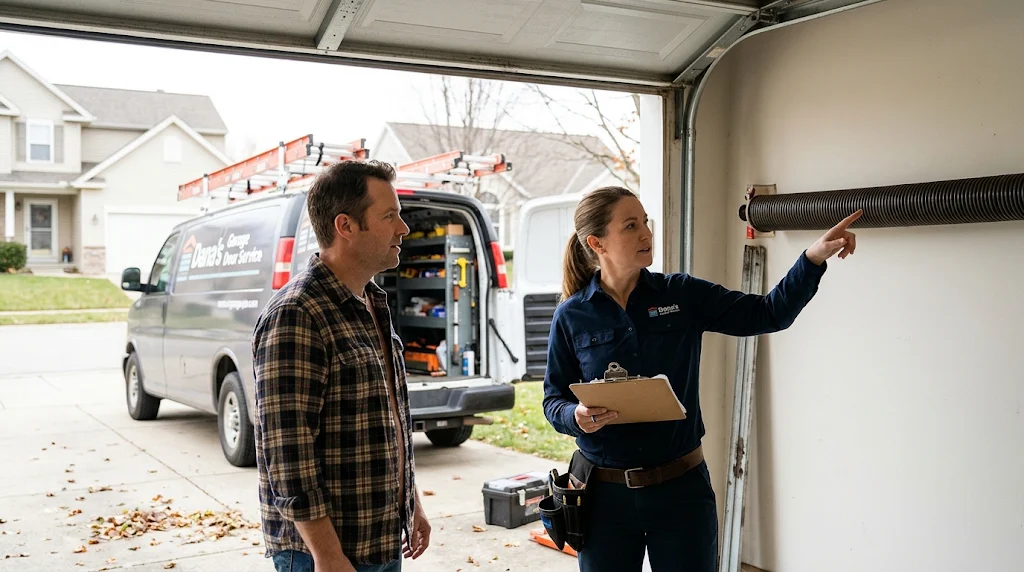
Dana’s technicians show homeowners the snapped spring or frayed cable before replacing it.
They also text a photo.
Seeing the problem removes the doubt.
4. Answer Fast
A broken spring can trap a car in the garage.
The first company to pick up and provide a service time often gets the job.
Dana added a second phone line and made this promise:
“Same-day or next-morning service.”
Then she made sure to keep it.
5. Bring the New-Door Math
When a door is over 20 years old, Dana’s technicians mention replacement once, along with the resale figure and a printed price range.
No pressure.
Many customers say, “I’ll think about it,” and call back in a month.
What the Technician Says
The conversation at the door matters most.
Dana’s technicians follow a simple script:
“Your spring snapped, and that’s the only thing stopping the door. The fix is $345 with today’s visit credited. Your rollers are worn, and they’ll likely go in a year or two. That’s $120 when you’re ready. That can wait for another day.”
Clear, priced, and fair.
The homeowner can say yes to the urgent repair and feel good about it.
What Changed for Dana
Here’s the reality check.
Posting prices cost her a few calls from people shopping for the $29 visit. She let them go.
Her repair calls grew from about 90 a month to about 115 over six months, mostly from reviews mentioning honesty.
Her technicians’ close rate on repairs stayed above 9 in 10, because customers called already knowing the price range.
New door sales grew more slowly.
About six repair calls a month on older doors turned into replacements within three months.
At an average of $3,800, that added roughly $22,000 a month in door sales.
Keep the Old Customers Close
A garage door company sees the same house every few years: a spring, then an opener, then a new door.
Dana keeps a list of every address her trucks have visited, along with the door’s age and what work was done.
Each fall, she sends a short postcard:
“Cold weather is hard on springs. If your door sounds rough, call us before it quits.”
The postcards cost about $0.60 each.
They bring a steady trickle of calls from people who already trust her, right around the season when springs tend to snap.
Your Garage-Door Checklist
Use this checklist to make sure your company stands out from lowball competitors:
-
A price list on your website and Google profile
-
A plain promise to fix only what’s broken
-
Photos of the broken part, texted before the repair
-
Same-day or next-morning service, promised and delivered
-
A simple script that separates “fix now” from “fix later”
-
The resale figure and a price range for every door over 20 years old
-
A review request after every visit, asking what was fixed
Make Honesty the Advertisement
Honesty is easy to claim and hard to fake. Reviews prove it.
Ask every customer to mention the price they were quoted and the price they paid. When those match, review after review, homeowners notice.
The lowball ads compete on the first number.
You can compete on the last one: the final bill that matches what the homeowner expected.
Every review that says “fair and honest” works harder than any $29 coupon.
What’s the most important thing a repair company can do to earn your trust on the first visit?
Author: Thomas E. Lodato, J.D.
Scale Hawk Media Group