
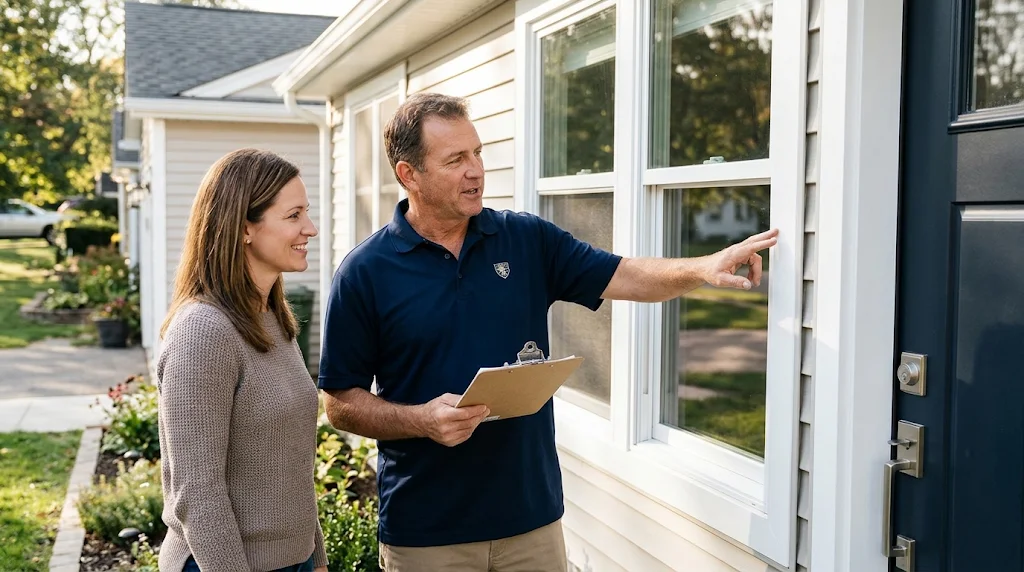
Windows and Doors: How Do Window and Door Contractors Win Against Big-Box Stores?
Short Answer: Compete on what the big stores can’t sell: one accountable owner, a crew that’s done this hundreds of times, and a clear answer when something goes wrong.
A big-box store sells a product and hands the installation to whoever is available. A local window company sells a finished opening that stays sealed for 20 years. Make that difference easy to see.
The Numbers Homeowners Are Weighing
Windows are a large purchase with a modest payback at resale.
The 2025 Cost vs. Value Report put the national average cost of a vinyl window replacement project at $22,073, with approximately 75.5% recouped at resale.
A steel entry door replacement averaged $2,435 and recouped 216.4% at resale.
2025 Cost vs. Value Report – National
So, a homeowner spending $22,000 on windows isn’t doing it mainly for resale. They’re doing it for comfort, quiet, and fewer drafts.
That’s a decision made on trust, not on the lowest price per window.
Losing to the Flyer
Imagine a window contractor named Paul. He has three installation crews, 20 years in town, and a solid reputation with builders.
Every spring, the big-box store down the highway runs a flyer:
“Windows from $299 each, installed.”
Homeowners call Paul, hear his price of $1,100 per window installed, and hang up.
Paul knew his price was fair. His windows had better frames, better glass, and a crew that flashed every opening properly.
None of that showed up in a 30-second phone call.
Five Ways to Show the Difference
1. Explain What “Installed” Really Includes
The flyer price often covers a basic insert with limited trim and caulk.
Paul created a one-page sheet that lists, step by step, what his installation includes:
- Removal and haul-away
- Inspection of the rough opening
- Rot repair, if found
- Flashing tape
- Low-expansion foam
- Interior and exterior trim
- Final cleanup
He hands it to every caller and posts it on his website.
2. Show the Opening, Not Just the Window
Most homeowners rarely see what’s behind the old frame.
Paul’s crews now take a photo of every opening after removal. When they find soft wood or missing flashing, the homeowner sees it before it’s covered.
Those photos also go on the website with the caption:
“What We Found Behind the Old Window.”
3. Put One Name on the Job
A store installation often runs through a call center and a subcontractor the homeowner may never meet.
Paul tells every customer:
“I’ll be your contact from the first visit to the final walk-through.”
He gives out his cell number.
That promise alone wins jobs.
4. Price the Whole House, Not One Window
Paul’s quotes show three options:
- The full house
- The worst five windows now
- The remaining windows next year
A phased plan makes a $22,000 project feel manageable, and it keeps Paul in the customer’s plans for two seasons.
5. Stand Behind the Installation in Writing
Window manufacturers warranty the product.
Paul adds a 10-year labor warranty on his installation. He prints it in plain language, just one page long.
What a Homeowner Hears on the Phone
Paul changed his first call, too.
When a caller says, “The store quoted me $299 a window,” Paul doesn’t argue. He says:
“That may be a good fit for you. Before you decide, ask them three questions:
- Who removes the old window and checks for rot?
- Who flashes the opening?
- Who do I call if it leaks in two years?
Write down their answers, and I’ll answer the same three for you.”
That isn’t a pitch. It’s a fair test.
Most callers come back after they ask.
What Changed for Paul
Here’s the reality check: Paul still loses some price shoppers, and that’s fine. A homeowner shopping only for the cheapest window will find it.
What changed was his close rate on the calls he did quote.
It rose from about 1 in 4 to about 2 in 5 over a season.
His average project held at about $14,000.
On 60 quotes a season, closing 24 instead of 15 adds nine jobs, or about $126,000 in additional work.
The photo habit cost his crews about five minutes per opening. The labor warranty cost him a few callbacks a year, most of them small.
Both paid for themselves many times over.
The reviews changed, too. Customers began writing about the photos and the cleanup along with the windows.
“They showed us the rotted sill before fixing it” became a common line.
That kind of review sells the next job better than any flyer.
Your Window-and-Door Checklist
Use this checklist to make sure your business clearly communicates its value:
-
A one-page sheet explaining everything “installed” includes
-
Photos of every opening after removal, shared with the homeowner
-
One named contact, with a cell number, for every job
-
Quotes with a full-house option and a phased option
-
A written labor warranty on top of the manufacturer’s warranty
-
Three fair questions to give callers who mention a store price
-
“What We Found” photos on your website
-
Entry door replacement offered on every window quote
Lead With the Door
Notice the resale numbers again.
A steel entry door recoups more than its cost on average.
Offer one on every window quote. It’s a small add, a quick installation, and a visible change the homeowner sees every day.
When you compare a store price to a local contractor’s price, what makes you pay more?
Author: Thomas E. Lodato, J.D.
Scale Hawk Media Group