
The $850 Line Item Clients Never Question
How a project binder turns a finished job into a 20-year sales tool
SEO Title: Project Documentation Binders: A Contractor Marketing Tool
SEO Description: Smart contractors charge about $850 for a project binder that costs $35 to make. Clients love it, and it brings in referrals for years.
Cover Image: A bound project binder on a new kitchen counter, open to before-and-after photos.
There’s a line on smart contractors’ invoices that clients almost never question:
“Project Documentation: $850.”
It costs about $35 to make. Clients thank them for it. And it keeps bringing in new work for 20 years.
Here’s how it works.
What the $850 Covers
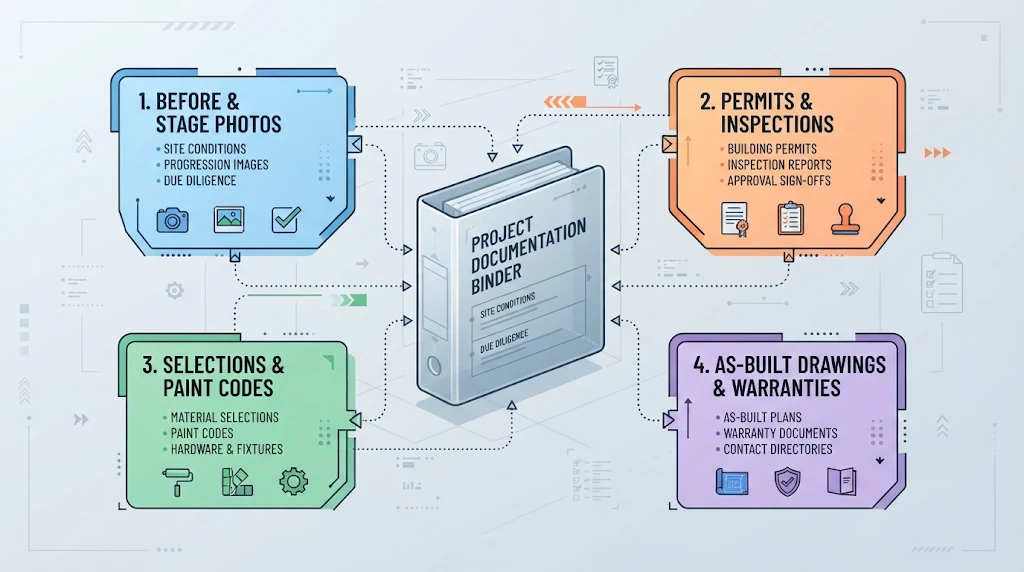
At the end of each job, these contractors spend three to four hours building a project binder for the client. Inside:
- Photos of every stage: before, during, and after.
- Copies of all permits and inspections.
- Paint colors and product specs.
- Warranty papers for every material and appliance.
- Contact info for each trade: plumber, electrician, HVAC.
- As-built drawings, if anything changed from the plans.
- A maintenance schedule for the new systems.
They bind it in a quality cover with the company name and phone number on the front. Then they hand it to the client at the final walkthrough.
Materials: about $35.
Time: about three hours.
Typical charge: around $850.
Clients See the Value the Moment They Hold It
Clients pay it gladly. They see the value as soon as the binder lands in their hands. The reactions sound like this:
“Wait, you documented everything?”
“Where did you get these before photos? I forgot we even took those.”
“This is amazing. I was worried about keeping track of all the warranty info.”
They didn’t know they wanted it until they saw it.
Now they’ll always have:
- The exact shade of white in the kitchen.
- The HVAC maintenance schedule.
- The permit papers they’ll be asked for when they sell.
- The plumber’s number when something breaks two years from now.
If you’ve ever tried to match a paint color five years after a remodel, you know what that’s worth.
The Real Payoff Is the Referral
Three months later, the client’s neighbor asks, “Do you know a good contractor?”
What does the client pull out?
The binder.
“Look at this. He documented everything. Paint colors, warranties, inspection reports. I’ve never seen a contractor do this.”
And the neighbor calls.
That $850 line item is a sales tool that lives in your client’s home for the next 20 years.
Most ads get a few seconds of attention. A website gets a minute. This binder sits on a shelf. It comes out every time something needs service. It gets shown to friends with pride. And every time it’s opened, your name is on the cover.
A reality check: a binder won’t rescue a bad job. If the work disappoints, the binder becomes a reminder of that, too. It multiplies good work. It can’t replace it.
How to Build It Into Your Business
The binder only takes three or four hours at the end if you build the habit into the whole job:
- Take before photos on day one. Every room, every angle. Once demo starts, you can’t get them back.
- Photograph each stage. Especially what will be hidden: plumbing, wiring, framing, insulation. These photos pay off at repair time.
- Keep one folder per job. Permits, inspections, specs, warranties, and receipts go in as they arrive.
- Record every selection. Paint brand, color name and code, sheen, tile, grout color, fixtures, and model numbers.
- Mark up the drawings as you go. Every field change goes on the plans, so your as-builts are right.
- Write a simple maintenance schedule. Filter changes, sealing, gutter cleaning, and warranty signup deadlines.
- Hand it over at the final walkthrough. In person. Walk the client through a few pages.
Make It Even More Useful
A few extra touches:
- Add a digital copy. A USB drive, or a QR code linking to a cloud folder. Clients love the binder, and they also like it on their phone.
- Put a “call us first” page up front, with your number for service or future work.
- Set a one-year reminder. That’s when warranty issues tend to show up. Use the call to check in and ask for a review or referral.
- Keep a copy yourself. When the client calls in five years, you’ll have the answer.
Good Work Is the Starting Point
Every contractor aims to do good work. That’s the price of entry.
The great ones create something that reminds clients why they hired them, long after the crew has left.
Can you see that binder sitting on your client’s shelf right now?
Do you give clients anything at the end of a job? What has made the biggest impression? Share your ideas in the comments.
Follow me for a new lesson from the job site every week.