
Two Types of Contractors, and Why I Kept Paying More for One
Your skills win the first job. Your updates win the next five.
SEO Title: Contractor Communication: The Key to Repeat Business
SEO Description: After 40 years of hiring contractors, I kept picking the ones who kept in touch, even at higher bids. Here’s the update habit that wins.
Cover Image: A builder on site sending a progress photo from his phone.
In over 40 years of building and developing, I’ve hired two types of contractors.
One type I hired once. The other I hired again and again, even when they cost more.
Which type are you?
Type 1 and Type 2
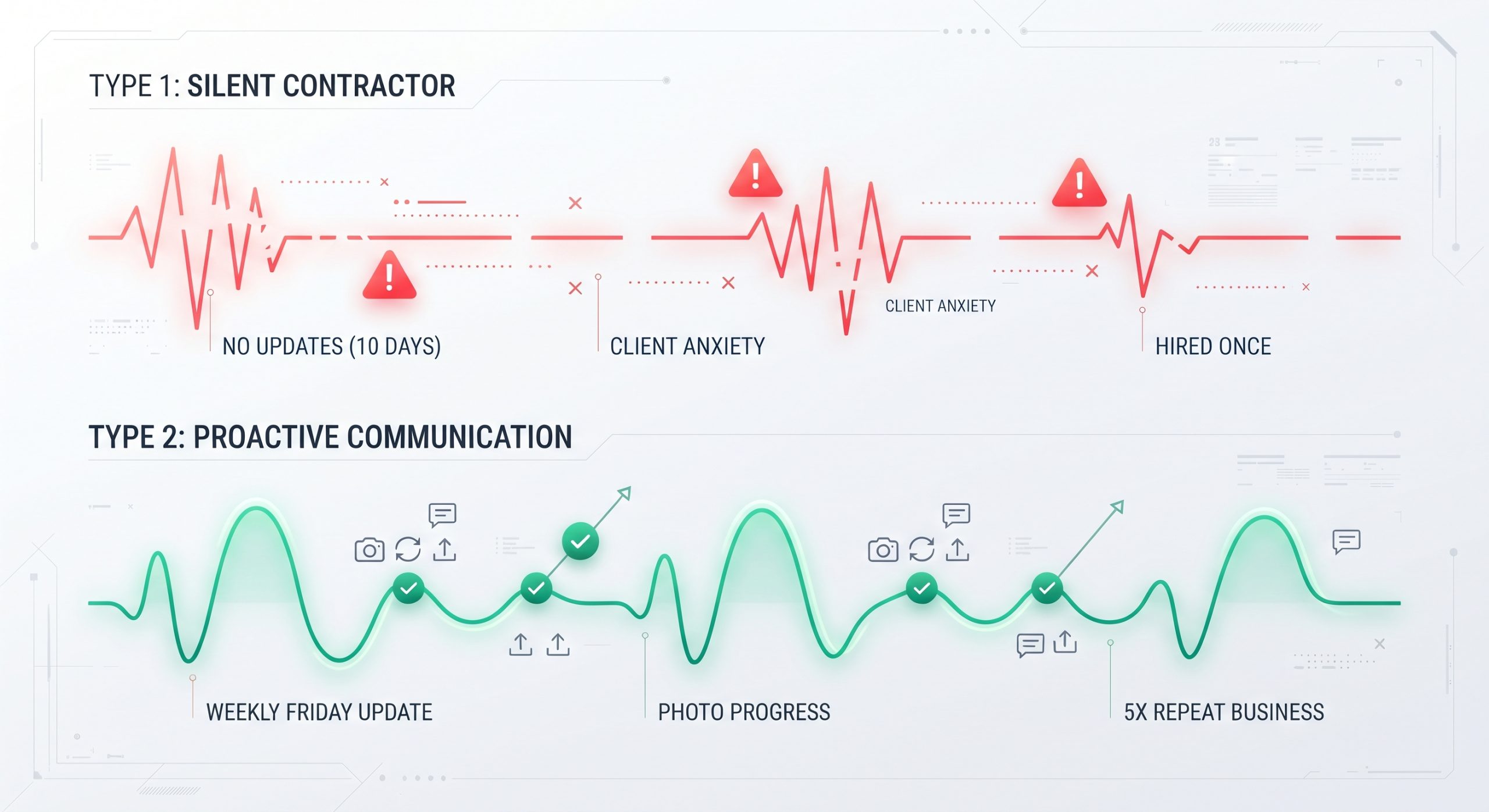
Type 1 does great work. Then goes silent mid-project. You chase them for updates. The work gets done. You’re anxious the whole time.
Type 2 stays in touch. Quick check-ins. “Here’s where we are. Here’s what’s next.” The work is about as good as Type 1. The experience is night and day.
I kept hiring Type 2, even when their bids were higher.
Silence costs more than problems
The reason is simple: not knowing what’s going on is more stressful than real problems.
When a contractor checks in often, I trust them to handle issues. When they go dark, I assume the worst.
That’s not just me. It’s how people work. When the updates stop, the mind fills the gap, and it rarely fills it with good news.
A client who hasn’t heard from you in ten days isn’t thinking, “They must be making great progress.”
They’re asking themselves:
- Did they move the crew to another job?
- Is there a problem they’re hiding?
- Has the schedule slipped?
By the time you call, you’re doing more than giving an update. You’re repairing the doubt that grew while you were quiet.
Meanwhile, a contractor who calls early with a real problem usually earns more trust. The call proves they’ll tell you the truth.
Skills win the first job
Here’s the reality: your skills get you the first job. Your communication gets you the next five.
You win the first job on reputation, photos, and price. You win repeat work and referrals on the experience. And the experience is mostly communication.
When a past client recommends you, they rarely say, “His framing was perfectly square.” They say, “He kept us in the loop the whole time. We never had to wonder.”
That sentence sends you the next client.
It’s also why Type 2 could charge more and still win my business. I wasn’t paying for better carpentry. I was paying for peace of mind, and for not having to manage my contractor.
A simple update system
You can be a Type 2 contractor even if you’re not a talker. You just follow a system. Here’s one that works:
- Set the rhythm at signing. Tell the client how and when they’ll hear from you. “You’ll get an update every Friday. If anything changes the schedule or budget, I’ll call within 24 hours.”
- Send the update every week. Even when nothing big happened. Especially then.
- Share photos. A few progress shots calm a client faster than anything you can write.
- Call for anything that matters. Schedule changes, cost changes, problems found. Bad news goes by phone, then in writing.
- Answer fast. Even “Got it. I’ll get back to you by tomorrow” counts. Silence after a question is the worst silence of all.
A weekly update template
You can start this Friday. This format takes about ten minutes:
- Done this week: Two or three bullets.
- Planned for next week: Two or three bullets.
- Decisions needed from you: With due dates.
- Issues or risks: Anything that could touch the schedule or cost, and what you’re doing about it.
- Photos: Three to five.
Short, steady, and on time beats long and once in a while.
The “nothing to report” update matters most
Many contractors skip the update when nothing is new. Waiting on an inspection. Materials on order. A slow week.
That’s exactly when clients get nervous.
A two-line note fixes it:
“Quiet week. We’re waiting on the window delivery. Still on track for the 15th. Nothing needed from you.”
It costs you one minute. It saves you the worried call, the surprise site visit, and the slow loss of trust.
How often do your clients hear from you?
Take an honest look at your current jobs.
- Do your clients hear from you weekly?
- Only when they ask?
- Only when there’s a problem?
That rhythm is quietly deciding whether they hire you again, and whether they send their friends your way.
The work matters. It always will. Clients see the finished work once. They judge the experience every single day of the job.
Can you feel the difference between those two contractors?
What’s your update rhythm with clients? And if you hire contractors, which type do you keep going back to? Tell me in the comments.
Follow me for a new lesson from the job site every week.